Visit to Como, Italy
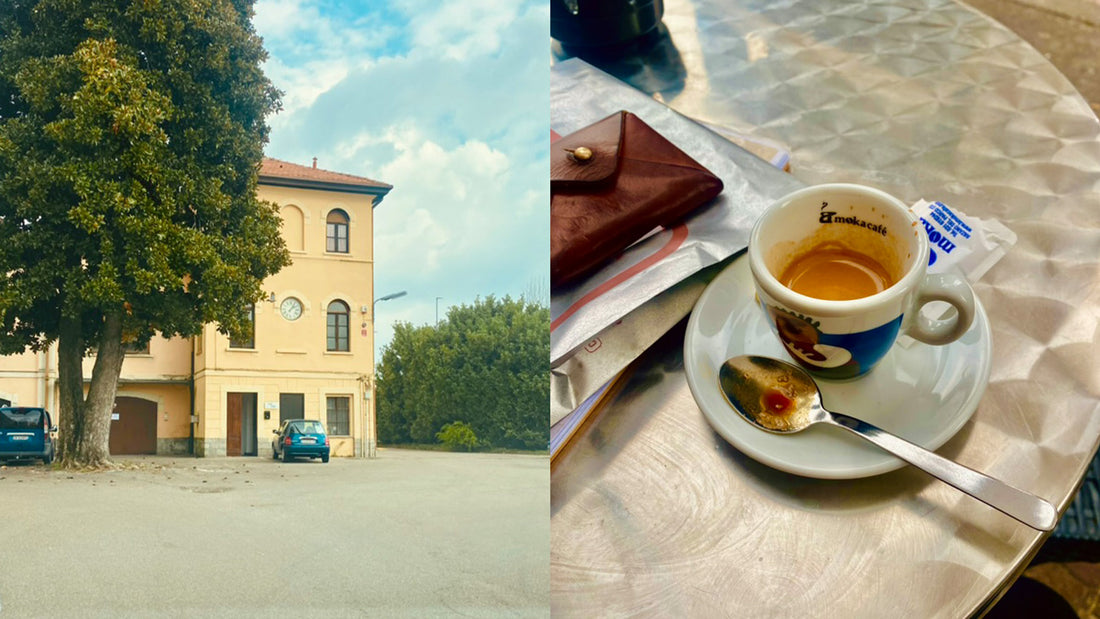
A visit to Como means a visit to our scarf factory. It's just a stone's throw from Lucerne, as there's an almost direct train connection from Lucerne to Como. I make a quick change in Art-Goldau and then it's a comfortable ride to Como.
In Chiasso, I get off the train and rent a Mobility car. This allows me to easily reach the less touristy parts of Como, the area where the producers live. Of course, an espresso (with a little sugar) in a small local café is a must. On the way there, I spot a market. I buy some freshly sliced prosciutto there.
Color removal
Today we're discussing colour matching for the Botanicals series . The colours have to be perfect, because if, for example, the warm orange-red and the cool navy blue of the Kelp Forest design don't harmonise, the whole design falls apart. It's amazing what a difference small nuances can make.
Colours play a crucial role in the Botanicals series . I deliberately chose vibrant colours that almost compete with each other. However, when combined correctly, they create a wonderful freshness.


Layout of design sections for colour matching. Left: Section of the African Olive Design (centre), Fynbos Design (left) and Kelp Forest Design (right).


The Fynbos (left) and Kelp Forest (right) scarves in the campaign shoot.

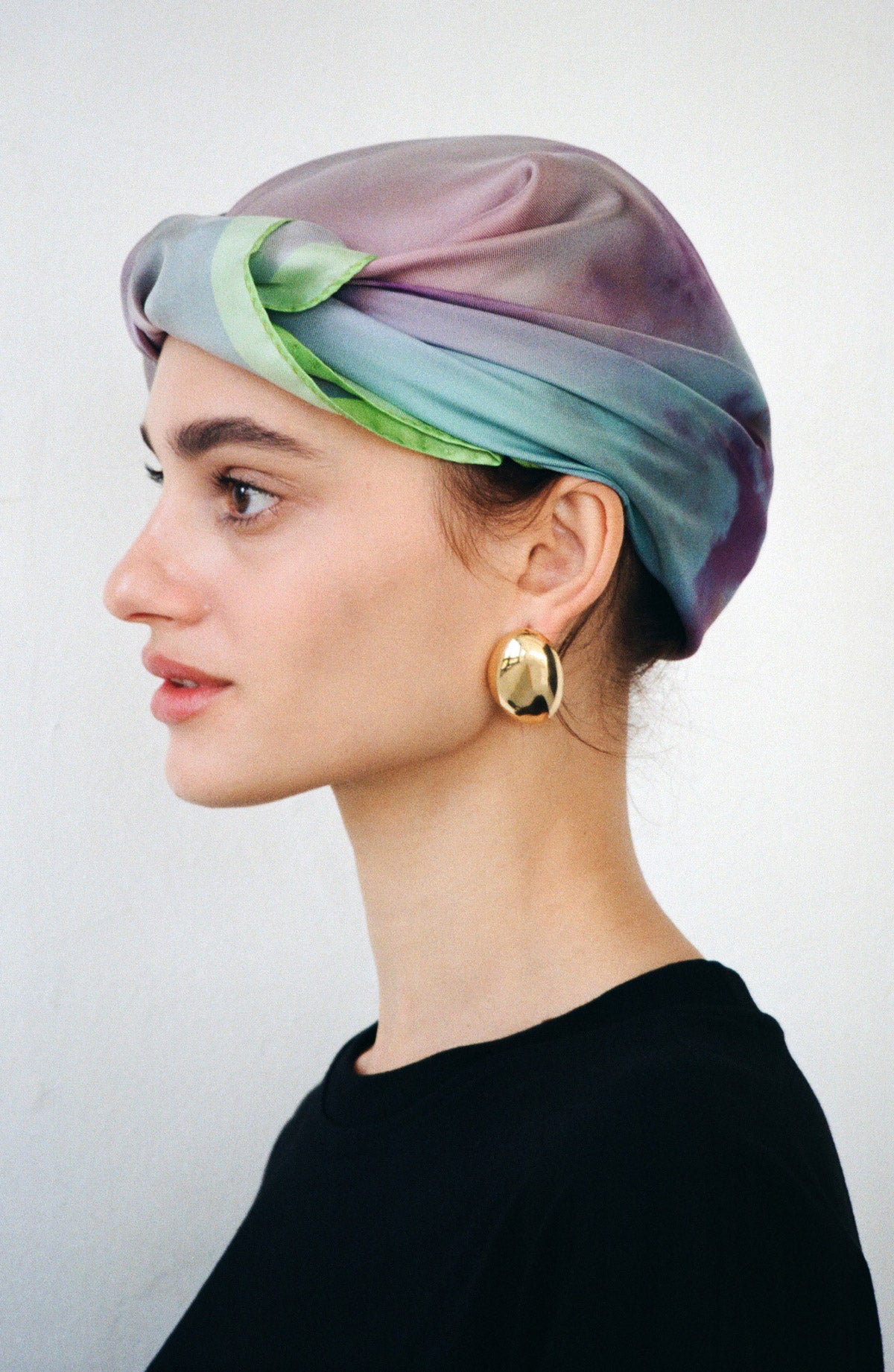
She wears the African Olive Design as a headscarf.
The material silk
For the first time, we opted for silk. A fine, GOTS-certified silk. The Global Organic Textile Standard (GOTS) label is awarded to textile products (clothing, home textiles and accessories) that consist of at least 70% organically produced natural fibres and are free from harmful substances from raw material to finished product.
Silk is a wonder fibre. Apart from its elegantly shimmering appearance, its lightness and feather-soft feel, it has many surprising properties.
Properties of silk
Silk is skin-friendly and temperature-regulating : The wonder fibre absorbs up to 30 percent of its own weight in moisture, dries quickly and does not wrinkle .
Thanks to its low density, it is light and supple , yet surprisingly robust due to the tear-resistant silk thread.
The production
We use that Direct-to-garment (DTG) printing process, which is suitable for natural fibres such as cotton or silk.
The steps are as follows:
1. Print preparation:
The print data is prepared for printing so that the colours and details come out as in the original design.
2. Printing process:
The fabric is prepared with appropriate coatings.
The design is applied using a digital printer.
3. Fixation and aftercare:
Colours are fixed by heat or steam.
The fabric is washed to remove excess dye and then ironed.
4. Cutting and processing :
The scarf is cut to size and finished with hems or fringes.
We roll the silk scarves. The Umlhaba from the Ubomi series (made of organic cotton), for example, is fringed.
5. Quality control:
The scarves are checked for colour accuracy, printing errors and workmanship.
Good to know: B-grade goods have undergone the same processing process up to this point and are therefore high-quality products. We also accept these and offer them at a reduced price or process them into other products.
6. Packaging:
The scarves are delivered to Switzerland and packaged by us.
We have specific requirements for the packaging and develop it in-house according to the following criteria:
- The packaging is intended to protect the high-quality product.
- The product should be ideal for shipping.
- The product should be presented in the best possible way (for both in-store and at home).
- The packaging should be recyclable and generate no waste.
Images from the production


A small section of the intermediate material storage area with rolls of fabric (left) and one of the many digital printing machines (right)
A digital printing machine in operation.


Left: The machine washes and prepares the fabric for the printing stage. Right: The machine is only visible from the front. It extends by another 5 to 10 meters and is responsible for fixing and post-treating the print. It steams the fabric.
Como in short
The day ends with a stroll through Como and a delicious meal. Along the way, I discover a little oasis in a courtyard. It's a business trip, but it always feels a bit like a vacation ;)


Pizza with saffron (left), small discovery in the courtyard (right).

The Cathedral of Como towers above the rooftops.
That's all for today. See you again soon.
Best regards, Samuel