

Climate Expedition in Norway
———
Impressive stories from the world of the North
I'd like to share an experience from the seas and coasts of Norway. Simon Unternährer is currently exploring the bays and fjords of Norway. He reports:

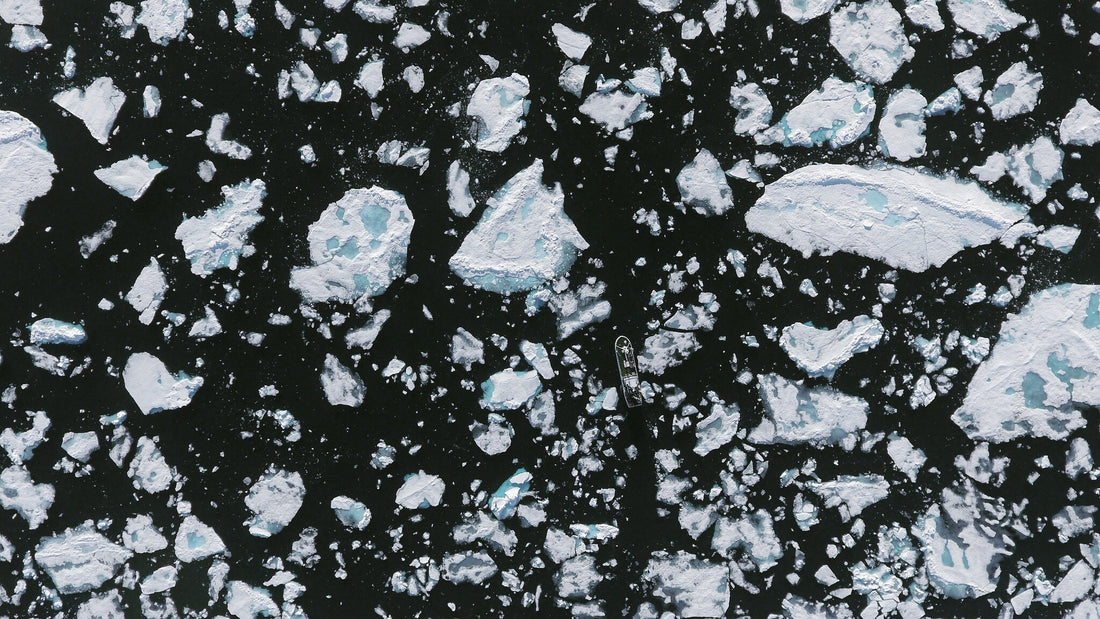
Image by Robert Wittmer
For the past eight months, I've been traveling in Norway with the TOPtoTOP Global Climate Expedition . As a volunteer, I participated in all the tasks that come up on a sailboat like that.
This includes navigation and sailing on deck as well as cleaning and cooking below deck.
Dario and Sabine Schwörer launched the expedition 20 years ago with the goal of reaching the highest mountains on each continent (the Seven Summits) using nothing but sail power and muscle power. They wanted to demonstrate that ambitious goals can be achieved in harmony with nature. Along the way, they regularly visited schools to inspire young people with both outdoor sports and a sustainable approach to our planet. Among other things, they organized all kinds of clean-up campaigns, reforested fallow land, and implemented sustainable heating and cooling systems. Successful examples were always incorporated into their repertoire and recognized with a Climate Award. The undertaking was originally planned for only four years. Mountain guide Dario wanted to do something for his office, which he increasingly saw melting away before his eyes. His wife Sabine, working as a nurse at the time, was enthusiastic about the idea.
What began as a four-year project has now grown into 20, and the expedition has far outgrown its infancy. In 2020, the expedition covered 111,000 nautical miles by ship, 24,000 kilometers by bicycle, and 500,000 meters of elevation gain on foot. Along the way, approximately 140,000 students in over 100 countries participated in presentations and workshops and collected an impressive 60 tons of waste. With 200 volunteers from 60 countries, a global family developed on the ship "Pachamama," which expanded with the births of Salina (Chile, 2005), Andri (Chile, 2006), Noe (Australia, 2009), Alegra (Singapore, 2011), Mia (Switzerland, 2015), and Vital (Iceland, 2017) as permanent crew members. The children who made the world's oceans their nursery have grown up as global citizens in the truest sense of the word.


Due to the spread of the pandemic, we were unable to embark on our planned North-East Passage voyage from Norway to Alaska in the summer of 2020, and all school visits had to be temporarily canceled. Instead, we decided to sail to Svalbard in the far north and collect water samples for two research institutions. ETH Zurich provided us with equipment for detecting environmental DNA traces, which are released in small quantities by marine organisms. The Western Norwegian University of Applied Sciences was primarily interested in the occurrence of microplastics in the Arctic and gave us a so-called manta ray net. While the results of both measurements do not yet prove causal relationships, they do show correlations between the presence of certain animal species and the microplastic content in their environment. According to marine biologist Meret Jucker, who accompanied us on our trip, plastic has already been found in the stomachs of 80% of some Arctic bird species.


In total, we spent four weeks exploring Svalbard, reaching the archipelago's outermost points. Sailing our vessel without an icebreaker, we sailed as far north as 81.17 degrees and were the first sailing ship ever to circumnavigate the island of Nordaustlande in July. On the southern island of Hoppen, the local meteorologists told us that the ice had receded significantly in recent years. When they began taking measurements 15 years ago, the water around the island froze over as early as October. Over the last five years, this has shifted to December, and last winter even to February. At the same time, 50 cm of permafrost now thaws in July, compared to just 5 cm 15 years ago.
Regarding plastic, we also made some unpleasant discoveries. Even on remote beaches in northern Svalbard, piles of plastic kept accumulating. The clean-ups often felt like Sisyphean tasks, as one could spend days on end doing them.
Besides these less pleasant sights, Svalbard had plenty of breathtaking natural scenery to offer. The mighty glaciers paved our way to the archipelago's highest peak like a highway, and in addition to countless whales, dolphins, and walruses, we also encountered several polar bears. Filmmaker Robert Wittmer accompanied us and captured some of these impressions.

Image by Robert Wittmer


A huge thank you to Simon for allowing us to share his experience. Thanks also to Dario & Sabine and the crew for their dedication to our world. Some of the photos are by filmmaker Robert Wittmer; many thanks to him. We can expect a film from him about the project soon :)
Left:
TOPtoTOP: https://toptotop.org/
Where are they now: https://share.garmin.com/TOPtoTOPExpedition