Interview with Flavia Bienz - textile designer of the Ubomi series
Share
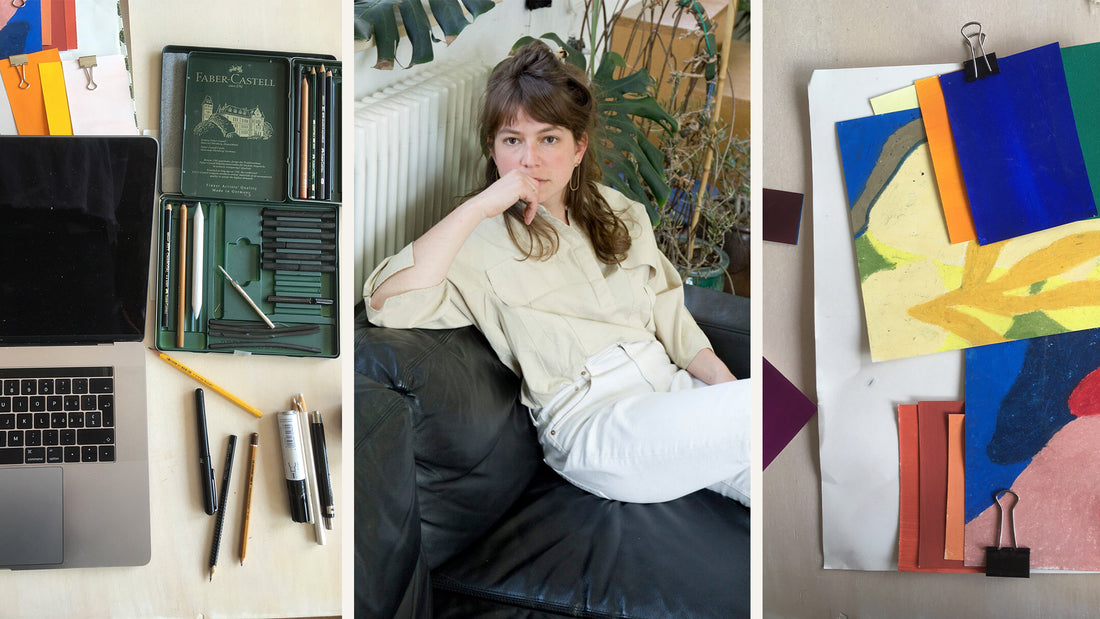
A conversation with textile designer Flavia Bienz. Together we developed the Ubomi series. Flavia and I made ourselves comfortable in the swimming pool of the Netzwerk Neubads in Lucerne and exchanged ideas.
For each scarf series, I deliberately choose a designer to immerse myself in a specific theme. Each scarf tells its own story and simultaneously creates a connection between South Africa and Switzerland.
Have fun, Samuel
What is the Ubomi series about?
Flavia: The Ubomi scarf series explores the theme of water. I focused on the bodies of water present in Lucerne. I went for many walks and visited places along the lake and the Reuss River that I personally love and that are also popular with Lucerne residents, such as Richard Wagner or the North Pole. I tried to capture the character of each place through observation and translate it into a visual language of form and colour.
Do you have a creative process you're following?
Flavia: In the beginning, it's all about inspiration. I often find inspiration in books or look for images that remind me of ideas floating around in my head. For the Ubomi series, it was the actual locations that inspired me, with all their elements: the plants growing there, the texture of the water, the stones you find, and the prevailing atmosphere. I love working in this very natural way, precisely this process. First, I seek inspiration, and then I take it a step further. I use words and initial sketches to figure out exactly what I'm looking for. I really enjoy working analogously with different materials and tools. By changing tools, you can always discover something new. Experimenting with how something feels with charcoal, pencil, or brush. Through this process, I try to let go of thinking and simply create. The goal is to experiment a lot. I find that a very beautiful part of the whole process.
How was the color combination created?
Flavia: I coordinated the colour selection closely with BADI Culture. Which colours reflect the waters of Lucerne while simultaneously establishing a connection to South Africa? We chose the colours together and decided that the scarves should be two-tone. The range of colours is endless, and we could have created something vibrant. In the end, we opted for something more understated. Colours that evoke a connection to the water, the earth, the grass, the sun, and all the elements associated with these places.
What is the material and manufacturing process of the scarves?
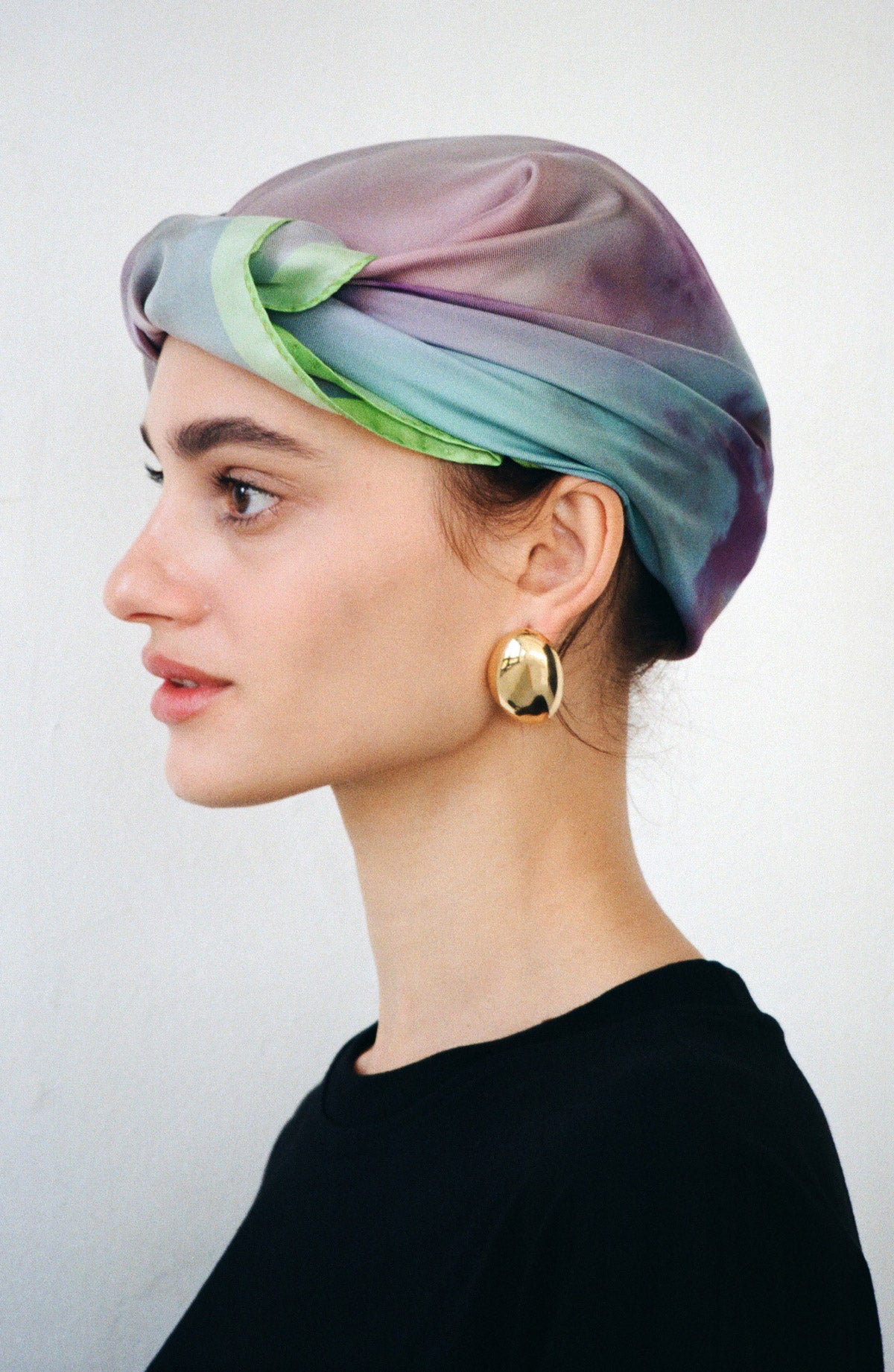
Flavia: The scarves are digital prints on organic cotton. This means they were produced in a printing house in Italy. You can very subtly see a woven structure, the grid of the fabric, which is an additional design element for the simple design of this scarf series.
The matte finish of the material is a beautiful combination with the simplicity and graphic design language. I find it to be a very graphic design with a sense of spaciousness and simplicity.
How important is it for you to work analogously?
Flavia: I needed the analog. For me, it's an integral part of the development process. I can't work exclusively digitally from the ground up. I know it's possible to work only digitally, but I would miss the tactile experience. I need the material, the pencil, the sound of the material. It stimulates the senses. I value all these aspects of creating, and I find the transition to digital incredibly beautiful. I certainly enjoy working digitally as well, but always in combination with analog creation.
How do you handle digital work?
Flavia: Hmm, there are always intermediate steps. I move into the digital realm relatively early and see how the initial drafts develop or in which direction they might go. These intermediate steps allow me to see if something is missing and always bring it back to the analog world. As I said, I integrate it relatively early to immerse myself in the design language, further develop the sketches, and thus find my direction.
When did you discover your passion for design?
Flavia: I attended the foundation course in Lucerne and afterwards discovered my passion for structures and materials. I drew a lot, and that was the beginning of my design journey. I designed many surfaces and patterns, as well as translating atmosphere into drawings. This applied to both textiles and spaces (e.g., wallpaper). After my Bachelor's degree in Textile Design, I started working on my own projects and independently. Then I pursued a Master's degree, which took me into a broader field. I was able to connect my experience with materials and textiles to socially relevant topics. At the Zurich University of the Arts (ZHdK), I completed my Master's degree in Design, specialising in "Trends and Identity." This focuses on trend and future research as well as socio-critical issues. This allowed me to gain a new perspective on art, society, and culture. It opened up new possibilities for me in design.
Where do you feel at home and where do you feel comfortable at work?
Flavia: I travel a lot between Eastern Switzerland and Lucerne. In Lucerne, or rather in Hochdorf, which is a bit outside the city, I have a studio. It's my safe space and the place where I feel at home. In the studio, I also feel free to create. It's a place where I can work and create without feeling like I have to do anything else. The distance from the city is good for me, I've noticed that. Just being by myself and in my own creative bubble.
Nevertheless, it's important for me to travel, to find inspiration, and to exchange ideas with other designers. I try to cultivate that. In my creative process, I really enjoy being alone. Or sometimes inviting others over, collaborating, working as a team of two, three, or four.
Location is central to me. Lucerne, for example, is my home, where I feel comfortable and where my family lives. As a designer, however, I still enjoy traveling. Both are important to me: retreat and exposure.
Do you have a favorite scarf?
Flavia: I fell in love with the little black scarf pretty quickly. It's a section of a design. Originally, it comes from the blue Amanzi scarf. That one is quite large for me personally. So the little black Amanzi scarf is a section of it, and of course, it's coloured differently—black and beige. For me, the design has a playful feel. It reflects the vibrancy of the Reuss River well. And despite its playfulness, it's very stylish.


